Semaglutide side effects belong in the foreground
The stomach appears in the formulation story and again in the tolerability story. The second appearance deserves equal space.
The stomach sits on both sides of the ledger
The semaglutide safety review describes a generally favorable risk-benefit balance in type 2 diabetes, with nausea, vomiting, diarrhea and constipation dominating the adverse effects. Nausea occurred in roughly one-third of patients. Digestive events were commonly mild to moderate and transient, especially during increases in the study amount; some participants stopped treatment because of them.
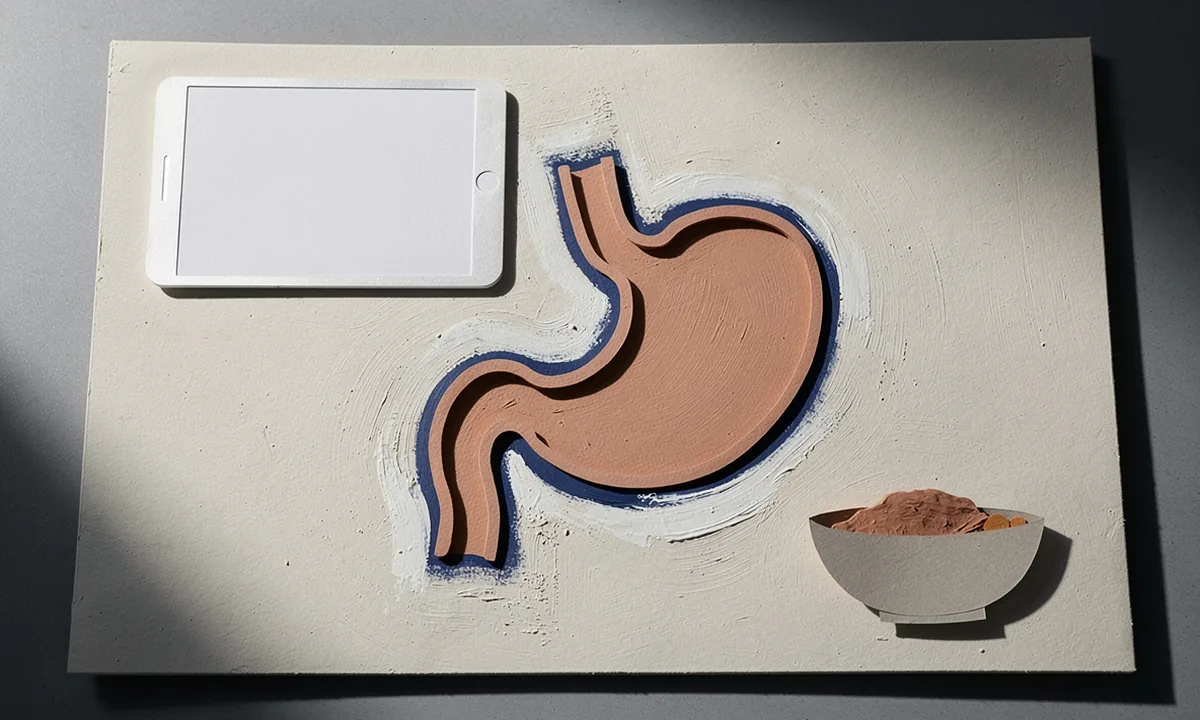
The drug slows stomach emptying, so its useful and unpleasant effects cannot be neatly assigned to separate inventions. I bristle at “just nausea.” A tolerability problem that ends treatment has changed the treatment's usefulness, however ordinary the symptom sounds.
The tablet delivers the same molecule to the blood. Digestive warnings remain relevant when a needle is avoided. The preparation changes the entrance while retaining the molecule's safety concerns.
Two cautions with clinical evidence behind them
Gallbladder disease, including gallstones, was increased versus placebo in the safety review. The speed and magnitude of weight loss are thought to account for much of that association. That explanation does not erase the observed increase.
In SUSTAIN-6, diabetic-retinopathy complications were more frequent with semaglutide, particularly in people with pre-existing retinopathy and rapid blood-sugar correction. The leading explanation is early worsening from that rapid correction, rather than proven direct injury by the drug. The trial plate includes both the cardiovascular benefit and the eye signal.
I give these cautions more space than an indiscriminate list of every suspected harm. Each has a particular evidence base and context. Losing those contexts can make an explanation sound either reassuring or alarming without making it more accurate.
A rodent result can still carry a serious human warning
The thyroid C-cell tumor warning comes from rodents exposed to high amounts. Human data have not established a clear increase in medullary thyroid cancer attributable to semaglutide. The safety review also explains why the warning remains: a personal or family history of medullary thyroid carcinoma, or multiple endocrine neoplasia type 2, is a contraindication. The human risk remains uncertain.
Acute pancreatitis, inflammation of the pancreas, is a class warning. The label account describes stopping treatment when pancreatitis is suspected; it does not establish a numerical increase in pancreatic cancer. Low incidence makes definitive conclusions about pancreatic and thyroid cancer difficult.
Pregnancy is also a contraindication. The current label account describes a roughly two-month interval before planned conception because the molecule leaves slowly. The half-life page explains that interval alongside the estimate for little drug remaining. These are warnings and label context, not directions for managing treatment.
Food thoughts and sulfurous burps have a different status
Community accounts describe quieter “food noise,” earlier fullness, less interest in sweets or greasy food, weight loss and improved home blood-sugar readings. Some describe less desire for alcohol. Alongside those welcome changes are nausea, sulfurous or egg-smelling burps, bloating, constipation, diarrhea, heartburn and tiredness.
These are anecdotal accounts, not clinical evidence. They do not establish a cause, a frequency among all treated people or a prediction of another person's experience. To my ear, quieter food thoughts name something a scale cannot show, but I cannot convert a memorable phrase into a trial endpoint.
Less often, accounts mention food aversions, a metallic taste, sensitivity to smells, very little interest in eating, hair shedding, a more hollow-looking face, headaches, dizziness and temporary redness, itching or soreness at an injection site. Explanations offered in those accounts, such as too little food or fluid, are themselves unverified. No dose or schedule follows from them.
Alcohol intake and hair shedding: early evidence
Chuong and colleagues found reduced alcohol intake in rodents given semaglutide. That result gives an animal research context to the anecdotal accounts of reduced desire to drink; it does not verify the human accounts. The link between appetite and alcohol leaves me curious even with that limit. A claim that the connection is settled would not.
Hair shedding also needs restraint. The current research account describes a pharmacovigilance signal and a possible explanation involving rapid weight loss rather than direct drug toxicity. That explanation remains unproven. Similarly, loss of lean mass during large weight changes raises concerns about strength, particularly in older adults; a scale cannot distinguish all the tissues contributing to the change. The safety review needs a place alongside the efficacy results.
Compounded semaglutide is a question about preparation
Compounded semaglutide is prepared by a pharmacy rather than supplied as the approved manufactured product. Semaglutide has FDA-approved products; compounded preparations have no FDA approval. The current record describes compounding under special shortage pathways from roughly 2022 to early 2025, followed by curtailed pathways after the shortage was declared resolved in 2025.
That record also describes dosing errors, adverse events requiring hospitalization and unverified or non-pharmaceutical active ingredients. It does not make the major trials tests of every compounded preparation. The large trials discussed here used the manufactured products; their results cannot simply certify a different preparation because it carries the same molecule's name.
This is where the site's central question becomes less charming and more consequential. I regard “what preparation was tested?” as a necessary companion to “what did semaglutide do?” The prescription-care context remains in the STEP 1 section. A licensed clinician's assessment and the relevant patient, state and treatment rules determine access; this site does not make that decision.