The preparation matters
Semaglutide: the preparation matters.
A tablet has to survive the stomach. An injection takes another entrance. The interesting part starts before either reaches the blood.
The molecule, the preparation and the result.
A medicine has to arrive before it can work
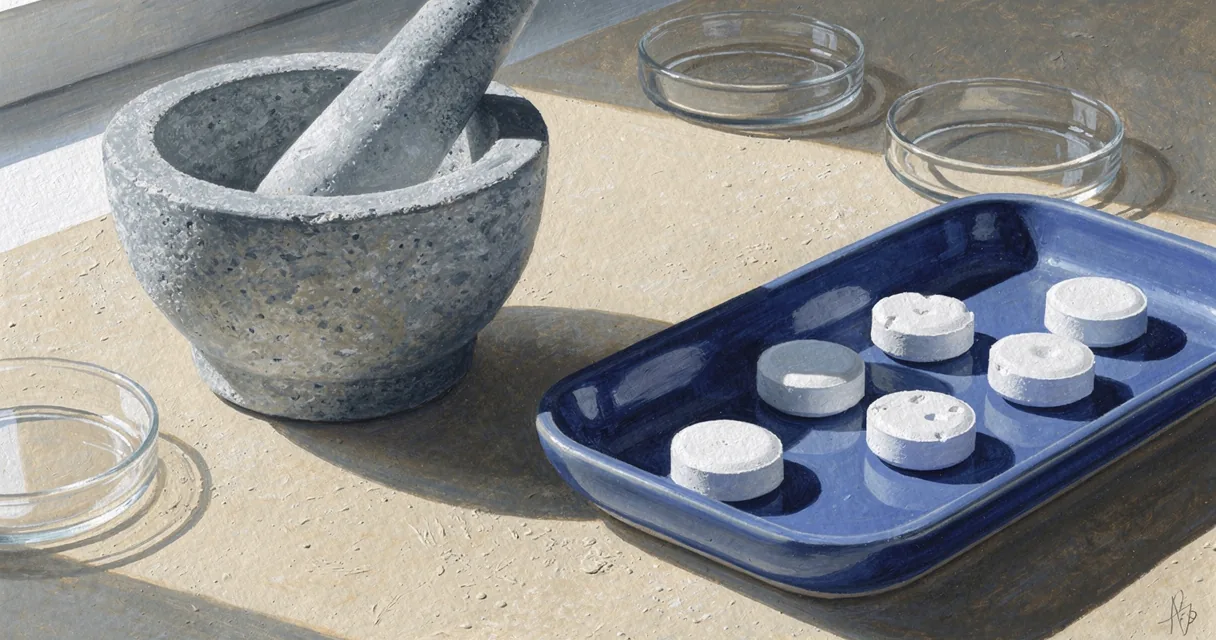
I expected the tablet to be the straightforward part of the Semaglutide story. Swallow something instead of having an injection: an ordinary improvement in convenience. The account of how little of the tablet reaches the blood undid that easy assumption. Even with its helper ingredient, the share is about 0.4–1%. Getting a peptide through the stomach is an achievement in its own right.
Semaglutide imitates GLP-1, a hormone released from the gut after meals. It helps insulin secretion respond to rising blood sugar, suppresses glucagon, which prompts the liver to release sugar, and slows stomach emptying. Its chemistry also gives it a much longer stay than the natural hormone. That combination made it a medicine with a daily tablet form and a weekly injection form, rather than merely a copy of a fleeting signal.
For me, the interesting question in “what is semaglutide?” is how a molecule becomes a workable preparation. The ingredient, the entrance and the amount that arrives belong together. Approved and compounded preparations have different regulatory status: semaglutide has FDA-approved products; compounded medicines are not FDA-approved.
The preparation is only the opening chapter
A formulation that reaches the blood still has to earn its results. STEP 1 tested weight change in adults without diabetes. SELECT counted cardiovascular deaths, heart attacks and strokes in adults with cardiovascular disease and overweight or obesity but no diabetes. FLOW counted major kidney-disease events in people with type 2 diabetes and chronic kidney disease. These are different achievements in different groups, even when the molecule's name stays the same.
SELECT drew my interest away from the familiar scale story. A trial that counts serious events asks something a photograph of a thinner body cannot answer. It also stops me from treating every claim about semaglutide as a claim about weight. The trial plates put those questions beside each other without pretending they were one experiment.
The less agreeable part has its own space. Nausea, bowel trouble, gallbladder disease and the eye signal in diabetes are not footnotes to an otherwise tidy invention. The downsides includes them, along with the anecdotal accounts of quieter food thoughts and sulfurous burps. Those accounts are not clinical evidence. This is research commentary, not medical advice.